

Posted: by The Alt Editing Staff
The Alternative is ad-free and 100% supported by our readers. If you’d like to help us produce more content and promote more great new music, please consider donating to our Patreon page, which also allows you to receive sweet perks like free albums and The Alternative merch. And if you want The Alternative delivered straight to your inbox every month, sign up for our free newsletter. Either way, thanks for reading!
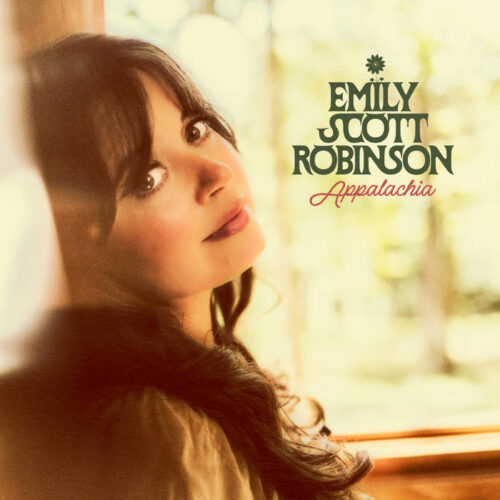
Recorded at Asheville’s Echo Mountain, Emily Scott Robinson’s 2021 third LP, American Siren, is an apt revelation. With the backdrop of societal unease post-2020, Robinson’s musings on small town life—spanning generations and characters—were as lived-in as they were cinematic. One moment she’s a teenager in the nosebleeds screaming John Prine lyrics with reckless abandon, the next she’s a devastated spectator mourning her friend who took his own life. Through it all, her observational storytelling remains its hallmark, and American Siren holds up as one of the strongest records of the 2020s. Since Siren, Robinson has not released a full-length project but has remained busy with 2022’s Built on Bones, a concept EP accompanying an adaptation of Macbeth by the Telluride Theater in Colorado. 2026’s Appalachia, however, is her first studio LP since American Siren and was well worth the wait.
With Josh Kaufman of Bonny Light Horseman and Taylor Swift’s Folklore on production, Appalachia was recorded in a century-old church in Upstate New York. Nevertheless, her North Carolina roots remain firm and central to this album. Opener “Hymn for the Unholy” harkens back to her churchgoing roots with the mid-tempo cadence of a timeless gospel standard. Here, she introduces the Appalachian winter (“In the quiet of the new year, we will let our old dreams go”); while mild compared to her current home of Colorado, these winters are still marred by periods of darkness and bitter cold. She finds potential for renewal despite this: “And when the spring comes, if we’re ready, we can plant new ones to grow.” Throughout Appalachia, Robinson’s naturalistic framing adds new dimensionality to her lyricism, as the weather and striking landscapes play supporting roles in narratives of community, family, and partnership. “Sea of Ghosts” finds her wading through the memories of a former lover atop a cycling guitar line. The sun-kissed image of her partner “high up on a hill” in the first verse is undercut by the harrowing image of Robinson “whispering ancient vows” and “songs of supplication… to steal [them] from the dead” on the second.
The bluegrass-inspired title track captures the beauty of the region through its blue hills and starry nights. Inspired by the stories of those impacted by Hurricane Helene, Robinson wanted to highlight the importance of community and care. Her expressive, lilting soprano celebrates Appalachia through empowering lines like “And we will dance with all our sorrows / we will sing through all our tears / we’ll tuck our babies into their beds and hope for better years.” Robinson widens the scope of kinship on “Dirtbag Saloon,” detailing her experience living in Telluride—a ski town in Western Colorado—while developers purchased land to build luxury housing, causing an affordability crisis. Accompanied by a playful fiddle line and mournful guitar strums, this song doubles as a last call sing-along (“If it ain’t gone yet, it’s going soon / Get your last round in at the Dirtbag Saloon”) and a biting commentary on the modern-day wealth gap (“I wish we could live here in sweet harmony / but they tore down the rentals and clearcut the trees / to build their ten-thousand square foot second homes”).
Appalachia is at its strongest, however, in its heartwrenching storytelling. At least once per record, Emily Scott Robinson will perform a minimalist guitar ballad, positioning her precise, devastating lyricism at the forefront, and it’s often the highlight of the entire album. Magnolia Queen had “Ricochet Lies,” Traveling Mercies had “The Dress,” American Siren had “Hometown Hero,” and Appalachia has “Time Traveler.” Robinson speaks of the last months of her grandmother’s life at an assisted living facility. The first verse introduces her grandmother’s dementia with bittersweet positivity (“Today, you’re back in 1953 / In a dress and heels on a football field, homecoming queen”). In the face of a life-altering diagnosis, Robinson’s observation “but I think you’ve got a secret power / so you don’t have to go back and relivе your darkest hours” stuns in its empathy and maturity. While her grandmother is the titular “time traveler,” the label can apply to trauma that spans generations of women in a family. On the second verse, Emily outlines her grandmother’s previous struggles with mental illness and how these have carried on throughout their bloodline: “There’s a darkness in our DNA, some fraying strand.” Her ancestors join Robinson on the final lines, as they welcome her grandmother into the afterlife. And in one final refrain of “you’re a time traveler,” Emily wills her to continue her journey and reconnect with the loved ones of her past. With the grandmother’s stories now memorialized in song, Robinson has become a “time traveler” in her own right.
The second half of Appalachia stares at the desolate worlds built on Side A with a dose of much-needed optimism. Standout “Bless It All” subverts the age-old southern aphorism—bless your heart—into an affirmation of reverence, from the mundane (“Bless your mama’s CorningWare from 1983”) to the seemingly insuperable (“Bless those nights you fought and wondered if you’d ever make it… one day we’ll sing about it, bless it all”). “Bless It All”’s beauty is in its simplicity: a blessed checklist of items, people, and moments soundtracked by Kaufman’s intricate acoustic guitar riffs. The following track, “The Time for Flowers,” was originally released in 2020 in the wake of COVID-19 and the murders of George Floyd and Breonna Taylor; however, it fits perfectly on Side B of Appalachia nearly six years later. Robinson comes across an elderly woman sowing seeds and, dejected by the last few months of instability, only sees futility in doing this (“Tell me, what’s the point in planting pretty things / in these days of darkness and disease?”). On the chorus, the woman replies, “The time for flowers will come again / maybe in one year, maybe in ten / there are days despair will win / but the time for flowers will come again.” While times can be “unprecedented,” the resilience of the human spirit is not, and such encouraging messages are just as salient in 2026 as they were in the height of 2020’s civil unrest and quarantine. Despite this hope, Robinson remains self-aware that optimism is unavailing without action. On the third verse, she wakes up the next morning ready to make change as her mobilization is rooted in aspirations for brighter days and group solidarity (“And when our honest work is done, we’ll gather at this table / we’ll hold each other’s babies and pour each other’s wine / and promise to remember that your fate’s bound up in mine”). After all, everyone who worked in the garden deserves to see the first bloom when the flowers finally return.
This collaborative spirit persists on the final two tracks of the record. The former is a cover of the British folk standard “The Water Is Wide” with Duncan Wickel on background vocals. By design, the lyricism is less detail-laden and contemporary, which would make it a lesser cut on Appalachia, but the gorgeous chemistry between Robinson and Wickel makes the track an enjoyable experience nonetheless. The closer, however, is a much stronger representation of the communal spirit. “The Fairest View” opens with an authoritative harmonica solo, wailing before Robinson’s playfully metatextual lines, “Let us play one more, my friend, did you bring your old guitar? / I will sing so clear and high you can hear it from afar.” With collaborator Lizzy Ross, she explores the lingering nostalgia for her childhood home, recounting the landscapes and emotions that raised her. In her youth, she managed to find love in the blistering summer heat, turn “the old tobacco barn” into a dancefloor, and live harmoniously with the religious types, wild children, and lowly forest creatures. The realities of adulthood, however, are far less utopian. She no longer lives in Appalachia, and her joy can only be ossified in wistful memory. Nevertheless, she can reminisce on the past with hopes for a brighter future, and “The Fairest View” is a stunning swan song to Robinson’s adolescence in Appalachia.
As fall fades and the roots begin to dry, the cycle returns to the winter of “Hymn for the Unholy.” But as the flowers grow feeble and grey, Emily Scott Robinson prevailed through a year of heartbreak, mourning, and systemic turmoil. Through the world-weariness of Appalachia, she found her subversive serenity.
Disappointing / Average / Good / Great / Phenomenal
Appalachia is out now.
E.L. Suarez-Thomas | @insomniblvck