

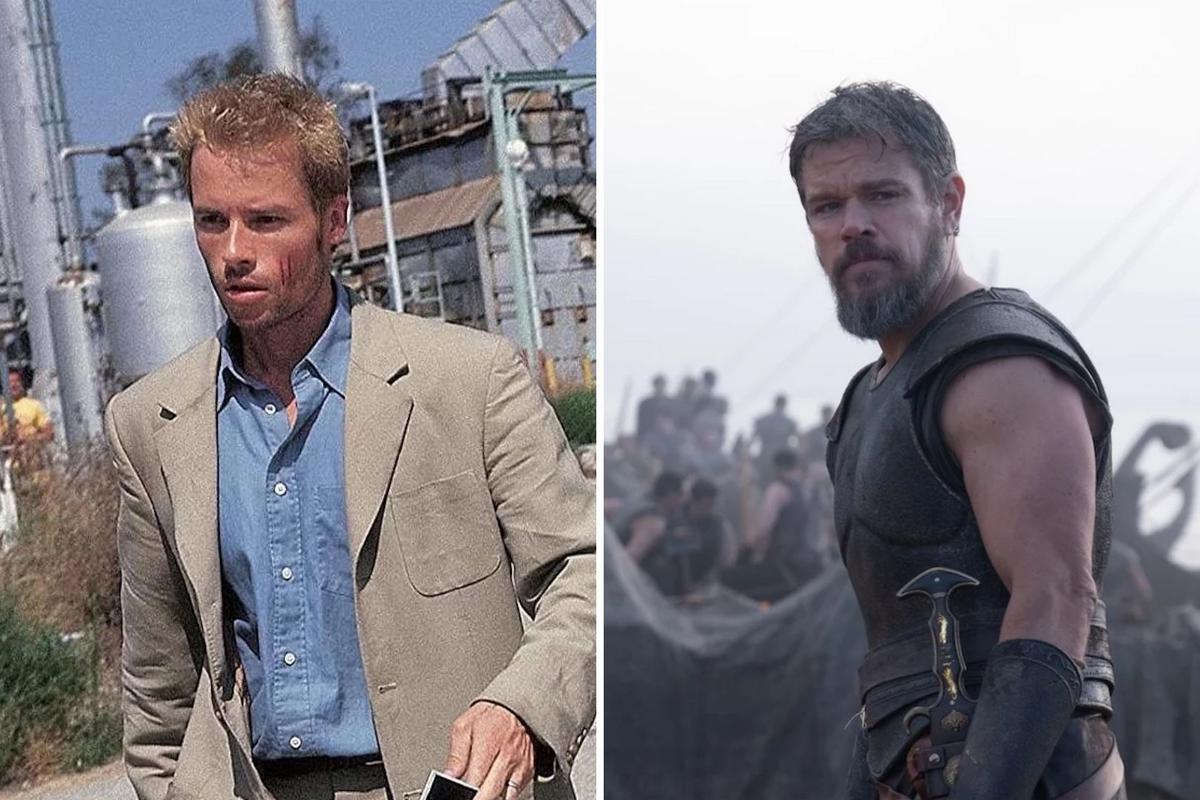
In the cinematic world of Christopher Nolan movies, time is rarely a linear progression. From the ticking clocks of his early thrillers to the expansive, multi-generational voyages of his later epics, Nolan has established himself as a master of structural complexity. His latest release, The Odyssey, continues this tradition. Starring Matt Damon, the film adapts the classic Homeric epic into a non-linear exploration of heroism and the passage of time, further cementing Nolan’s reputation for high-concept storytelling that challenges the audience’s perception of reality.
Across his 13 feature films, Nolan has maintained a remarkably consistent set of thematic concerns. Whether he is exploring the gritty streets of Gotham or the vast reaches of space, his work frequently grapples with the subjective nature of memory, the weight of guilt, and the technical precision of a well-executed plan. This consistency makes a retrospective of his career particularly rewarding, as each film seems to engage in a dialogue with its predecessors, repeating visual motifs and reexamining core beliefs about the human condition.
Ranking the work of a director like Nolan is a challenging task, primarily because even his least successful experiments often surpass the standard Hollywood fare in terms of ambition and craft. His journey began with the micro-budget noir Following, which introduced audiences to his fascination with non-linear editing and voyeuristic character studies. This evolved into the breakout success of Memento, a film that redefined the psychological thriller by mirroring the protagonist’s anterograde amnesia through its reverse-chronological structure. These early works laid the groundwork for a career defined by narrative experimentation.
As Nolan moved into the realm of big-budget blockbusters, he never lost his indie sensibilities. The Dark Knight trilogy proved that superhero cinema could be both intellectually rigorous and commercially dominant, treating its source material with a level of gravity previously unseen in the genre. His subsequent original works, such as Inception and Interstellar, pushed the boundaries of visual effects, favoring practical stunts and IMAX cinematography over excessive digital manipulation. This dedication to the “tangible” gives his films a grounded quality, even when the plots involve dreams within dreams or black holes.
In recent years, Nolan has shifted toward historical and scientific epics that demand to be seen on the largest screens possible. Oppenheimer showcased his ability to turn a biographical character study into a pulse-pounding thriller, using sound design and close-up photography to convey the internal turmoil of the “father of the atomic bomb.” Now, with The Odyssey, he brings his career full circle by applying his unique narrative lens to one of the oldest stories in human history. Each entry in his filmography serves as a testament to his commitment to the theatrical experience and his unwavering belief in the power of complex, adult-oriented cinema that respects the intelligence of its viewers.