

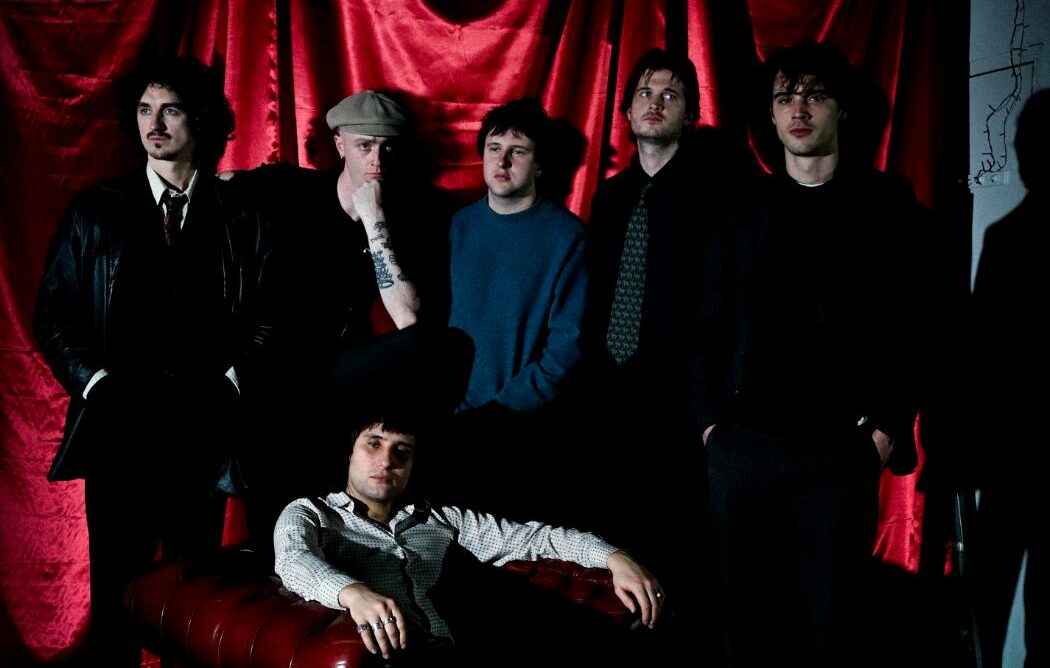
Brighton post-punkers Opus Kink properly arrived recently with their excellent debut album, Opus Kink The Sweet Goodbye. The record is a kaleidoscopic success, seeing the band come good on their early promise with a set of songs that prove to be as unpredictable as they are exciting. In an exclusive exploration of the record, the band provides a deep dive into the sonic architecture and creative chaos that defined their debut.
Come Over, Do Me Wrong
The journey of the album begins with a track born in the dread heat of summer. Bassist Sam originally penned a riff in A minor that the band initially dismissed for sounding too much like an Arctic Monkeys B-side. However, the song found its soul when the band’s saxophonist reimagined the riff on his horn. The result is a track that blends a touch of Ethiopian jazz with a narrative about the overwhelming power of love. Recorded at Fish Factory Studios during a freezing winter, the band recalls the session as a “method” experience, complete with multiple layers of clothing and the grit of three chords and the truth.
Will It Come For You?
Starting life as a Magazine-esque riff written by keyboardist Jazz, this track underwent a significant transformation. What began as a six-minute punk epic was refined under the guidance of producer Craig Silvey into a more concise, “poptastic” version. By adding a juddering synth loop, the band successfully steered the groove away from ska influences—a genre they are often mistakenly associated with. Lyrically, the song draws from Kafka’s In The Penal Colony, touching on the existential anxiety of finding one’s place in a rapidly moving world.
I’m A Pretty Showboy
As the first track recorded with Silvey, “I’m A Pretty Showboy” evolved from a groove the band had been playing since 2018. It stands as the record’s straight-ahead rock and roll moment, though it is far from conventional, featuring a big band horn arrangement, a Black Sabbath-inspired breakdown, and a modal-folk ending. The band describes the track as an exploration of “gyrating in the void,” finding meaning in a meaningless world through grandiose performance.
The Sweet Goodbye
The title track represents a fusion of disparate worlds: the “giddy-up” guitars of Western cinema meeting the valiant tones of the Red Army Choir. The recording process involved layering a massive baritone choir, aided by a studio assistant who happened to be an opera singer. The song serves as a complex commentary on Americana and the act of making art, featuring playful audio cameos from the production team as arcade-style sprites.
Peckham Nocturne
Nearly an instrumental, “Peckham Nocturne” features a covertly recorded verse that captures the atmosphere of South London. Inspired by Earle Hagen’s “Harlem Nocturne,” the track evokes nights spent working and drinking in Peckham. It is the oldest melody on the album, dating back to when the band members were teenagers, and serves as a atmospheric nod to their roots.
I Have To Shine My Sunday Shoes
Developed in a cramped studio in Lewes, this track attempts to reconcile the sounds of William Onyeabor, the Velvet Underground, and Screamin’ Jay Hawkins. The discovery of a vintage synth-bass groove provided the backbone for what has become a live favorite. Lyrically, it balances celebration and commiseration, reflecting on the mundane yet profound nature of daily life.
The Head Tree ft. The New Eves
A significant sonic departure, “The Head Tree” is a dance-inflected track inspired by the lore of Alice Molland, the last woman executed for witchcraft in England. Featuring the New Eves, the song incorporates ancient rage and medieval Welsh poetry. The chorus and horn sections draw from the “rich pastures” of ABBA and the Bee Gees, creating a unique blend of historical narrative and modern groove.
448C (The Colour of Love)
Described by the band as a “nonsense tune,” this track features a surreal cast of characters and a mix of bossa-nova, pub rock, and Disney villain falsettos. It is the only track on the record to utilize autotune, which the band used to devastating effect. The recording process was marked by a year-long search for the perfect synth sounds and a marathon four-hour triangle session.
Crucify!
A long-standing fan favorite, “Crucify!” is a narcissistic epic that has served as the band’s set closer for years. It is a complex marriage of influences, ranging from Motomami to Bob Dylan and Hawkwind. The track features reggaeton hooks and stolen Serge Gainsbourg lyrics, representing the band in all their “misguided floridity.”
Oh, Irony
The album concludes with an inevitable ballad. Drawing inspiration from Otis Redding and Kris Kristofferson, “Oh, Irony” is a paean of lack and self-pity. The vocal was captured in a single, raw take, while the instrumental ending features a complex five-part horn harmony written and recorded in just thirty minutes. It serves as a restrained, classy farewell to a record defined by its restless creativity.