

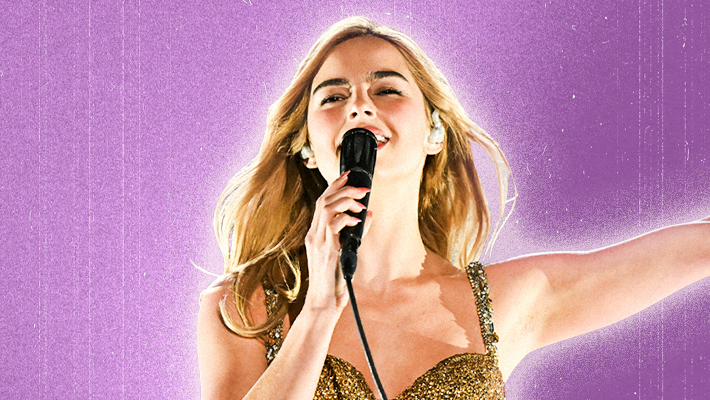
When Addison Rae released her debut album, Addison, the music industry was forced to reckon with a new reality. She had achieved the unthinkable: successfully pivoting from a social media celebrity miming lyrics to a bona fide pop star creating her own. Publications that typically champion the avant-garde, such as PAPER, declared that Rae was no mere fad, but a permanent fixture in the landscape. Even Pitchfork, notorious for its rigorous grading, awarded her release a commendable 8.0 out of 10.
Rae’s ascent has been characterized by a disruptive energy that challenges traditional industry gatekeepers. Her presence on the remix of Charli xcx’s BRAT—specifically the high-octane reimagining of “Von Dutch”—and her subsequent appearance on the Coachella stage alongside the dance-pop icon, signaled a shift. Rae is no longer just a digital creator; she is a jolt to a system often skeptical of those who find success outside conventional pathways.
The Evolution of a Modern Icon
To understand the current trajectory of Addison Rae, one must look back to 2019. At the time, she was a broadcast journalism student at Louisiana State University, amassing a following of nearly 90 million through charismatic vlogs and dance videos. While early EPs hinted at her musical ambitions, it wasn’t until the release of her full-length debut, Addison, that her artistic vision fully crystallized.
The album showcased a surprising depth. “Diet Pepsi” earned comparisons to Lana Del Rey for its sugary yet emotive sonics, while “Fame Is a Gun” explored a grittier, hedonistic side of dance-floor pop. In “High Fashion,” Rae proved she was in on the joke, delivering witty lines with a winking confidence. Co-produced and co-written with Luka Kloser and Elvira Anderfjärd, the project didn’t just meet the standards of 2025 pop—it redefined them, cutting through the noise with authentic songwriting and a sophisticated embodiment of modern womanhood.
Navigating Industry Skepticism
Despite her commercial and critical success, Rae has faced significant hurdles. Her exclusion from the VMAs was seen by many as a snub, especially given her aesthetic alignment with the early 2000s MTV era. Furthermore, while she has received the ultimate seal of approval by opening for Lana Del Rey, a segment of the audience remains reluctant to let her out of the “TikTok box” she initially built.
However, the Recording Academy has a long history of subverting expectations. From Beck’s Morning Phase triumphing over Beyoncé to Macklemore & Ryan Lewis winning over Kendrick Lamar, the Grammys often lean into the unexpected. As the industry looks toward the 2026 Grammy Nominations, Rae stands as a formidable contender for the Best New Artist prize.
A New Standard for Pop Stardom
If Rae’s name is called this Friday, it shouldn’t be viewed as a shock, but as a recognition of merit. She is currently positioned against talented peers like Sombr, Lola Young, and The Marias, yet her impact on the cultural consciousness is unique. Music, at its best, should shake the listener awake from the status quo. Rae does exactly that, forcing a reconsideration of what it means to be a Gen Z hero.
Her journey is a testament to the power of the modern digital landscape—a shot against pessimism that proves an iPhone and a dream can lead to the stages of Wembley and Coachella. In an era where the industry is constantly trying to decode the algorithm to “break” new talent, Rae has leveraged her massive popularity into something far more substantial: authentic, well-earned fame.