


In the high-stakes world of live music, Beth Denton has carved out a formidable reputation as a female sound engineer, operating under the moniker Beth Denton Sound. As a front-of-house (FOH) engineer for some of the most compelling acts in the industry, Denton’s journey is a testament to the blend of technical expertise and psychological resilience required to thrive behind the mixing desk.
The Journey to the Front-of-House
Denton’s career began with a formal foundation, studying Technical Services at the Academy of Contemporary Music in Guildford. However, the true education happened in the field. By shadowing engineers in every venue possible, she developed an intuitive understanding of live sound. This period of observation eventually gave way to a realization of her own capabilities. “I shadowed for way too long,” she reflects, noting that she only felt ready to take over when she began questioning the technical choices of the engineers she was assisting.
Her professional home became The Boileroom in Guildford, where she worked freelance until the global pandemic. Upon the lifting of restrictions, the venue hired her full-time, providing a platform that Denton credits with building her confidence. The Boileroom, notably female-run, offered a safe environment to hone her craft, eventually leading her to the role of head engineer.
Navigating Gender Dynamics and Industry Sexism
While Denton identifies as a skilled professional first, she acknowledges that being a female sound engineer remains a significant talking point in a male-dominated field. “The reality of the industry we’re in is that there’s not enough girls. Full stop,” she states. While she aspires to a world where gender is irrelevant, recent experiences—ranging from being mistaken for a “girlfriend” to being told she is needed for her “mothering instincts”—highlight the persistent gap between the ideal and the reality.
“The reality of the industry we’re in is that there’s not enough girls. Full stop. But the ideal world is one where gender has no impact, and I can be a live sound engineer, not a female live sound engineer”
Denton views her position as one of responsibility, “taking it back” for the women who were previously overlooked or undermined. However, this visibility comes with the weight of impostor syndrome. Being recognized by organizations like Women In Live Music (WILM) is a double-edged sword; it provides necessary recognition but can also trigger thoughts that her hiring is based on gender rather than skill. This is exacerbated by the lack of female representation in mainstream accolades, such as the TPi Awards, where shortlists for FOH categories remain predominantly male.
From Grassroots Venues to European Arenas
The transition from house engineer to touring professional was driven by a need to prove her versatility. Denton began networking aggressively, reaching out to managers of artists she admired. This led to a career-defining opportunity with Ellie Dixon, supporting Pentatonix across Europe. The jump from intimate venues to 13,000-capacity arenas was a trial by fire.
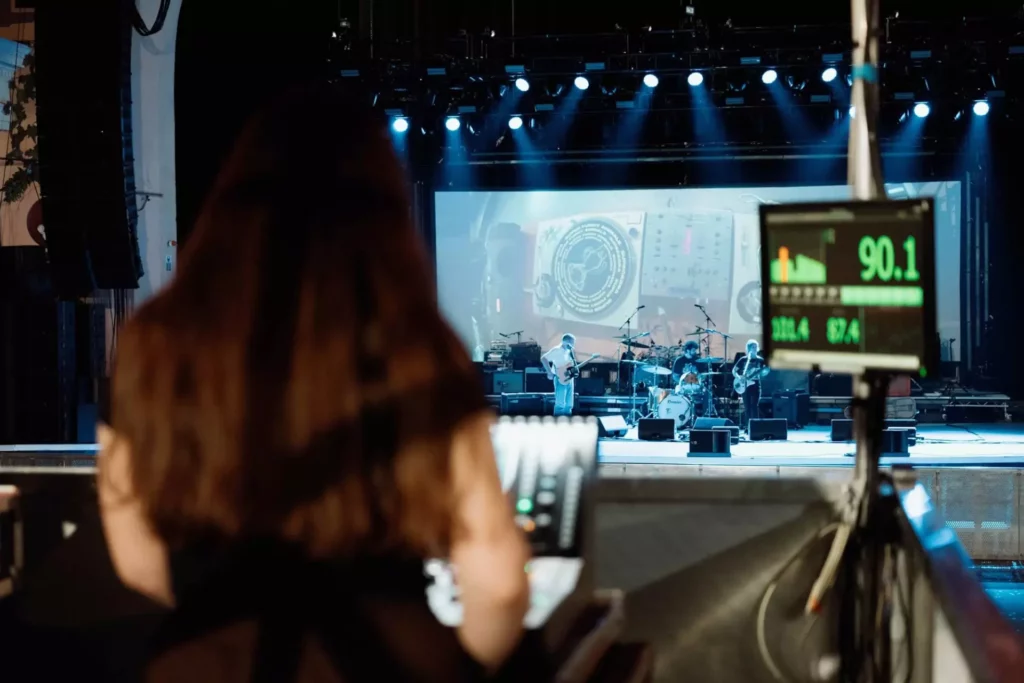
“It was the most insane thing I had ever heard,” Denton recalls. With only two weeks of preparation and a small team of three women in a van, she navigated the complexities of arena-scale production. Despite technical hurdles—such as playback laptops (often utilizing software like Ableton) crashing mid-performance—the tour was a success, cementing her status as a genuine touring FOH engineer.
The Technical Philosophy of Live Sound
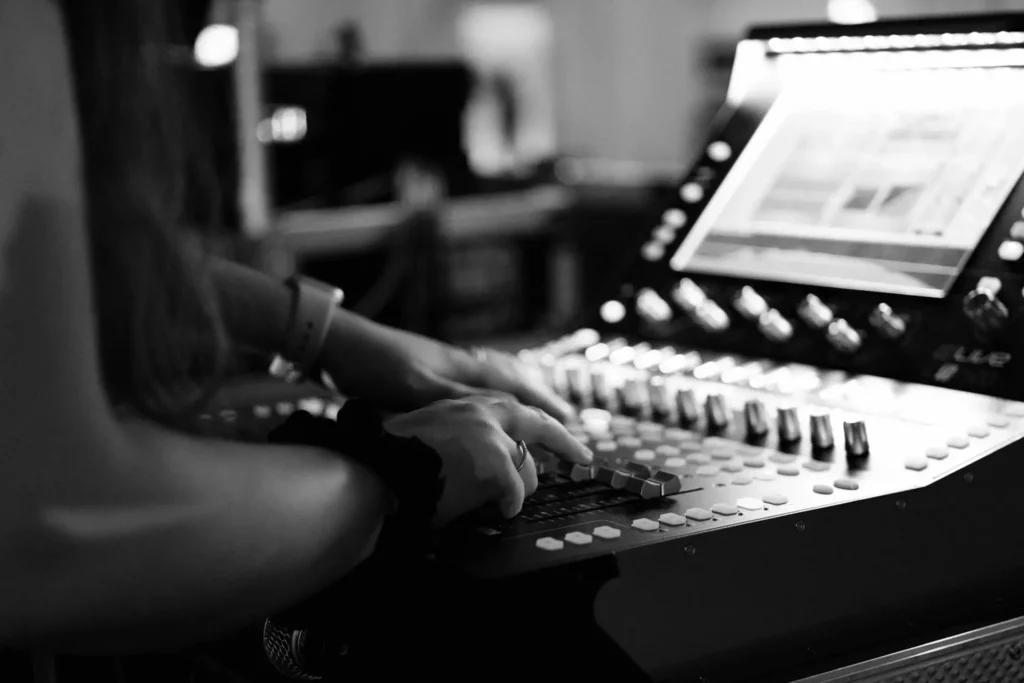
Denton’s approach to mixing is deeply organic. Having worked extensively with bands like The Bug Club, she has developed the ability to produce a high-quality mix on almost any digital sound desk. She eschews “fancy gadgets and gizmos,” relying instead on her ears and a deep understanding of the music. For Denton, the desk is an instrument, and the mixing process is a real-time reaction to the energy of the performance.
She also notes the physical challenges of the job with a touch of humor, pointing out that analogue desks were often designed for taller operators. “I usually have to stand on a box to see over all the dials and reach everything,” she jokes, questioning if height was a historical barrier for women in the field.
“I’ve learned how to get a good mix out of almost any digital sound desk that gets put in front of me”
Systemic Challenges and the Future of Touring
As her career has progressed into 2024 and beyond, Denton has become more selective about her roles, prioritizing safety and creative alignment over financial gain. She is a vocal critic of the “mixed role” culture in DIY touring, where one person is expected to act as tour manager, FOH engineer, and driver. “There’s a danger to life which isn’t worth it to me for any amount of money,” she asserts, highlighting the systemic undervaluation of creative professionals.
Denton maintains a balance between high-paying tours and DIY passion projects, noting that the former often subsidizes her ability to work with emerging artists. However, the freelance lifestyle remains a challenge for mental health. The “ebbs and flows” of the calendar, combined with the pressure of social media comparison, can lead to burnout and self-doubt.
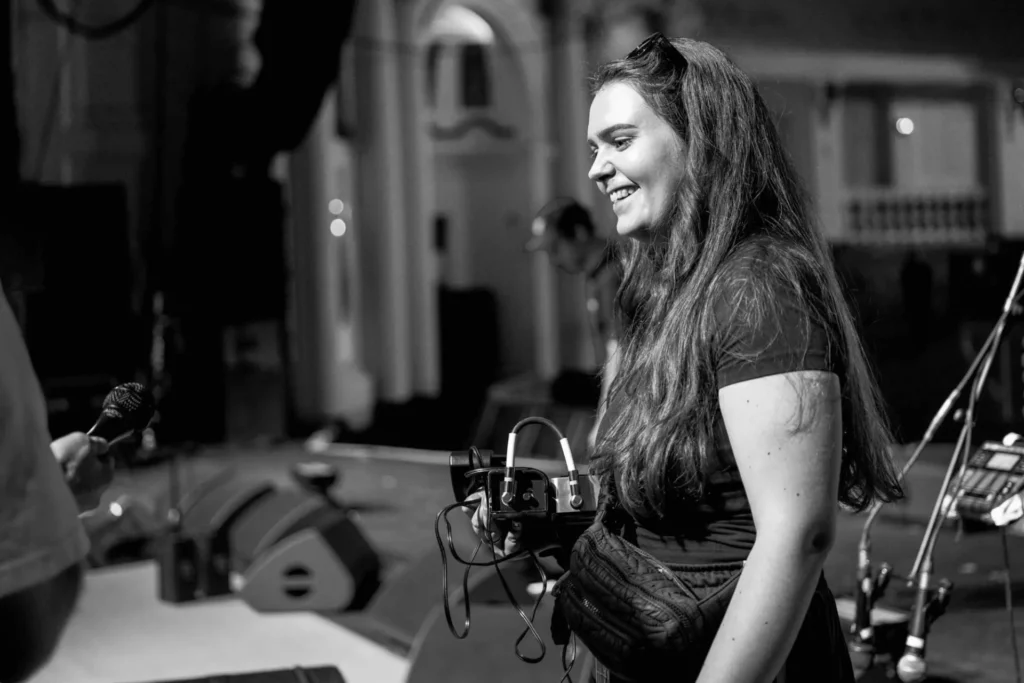
Ultimately, Denton finds her identity behind the desk. While the struggle to separate “Beth” from “Beth Denton Sound” continues, her commitment to the craft remains unwavering. For Denton, touring is not just a job; it is a lifestyle that offers incredible highs, provided one is prepared to navigate the complexities of the road.