
Before social media algorithms dictated the content we consume, and platforms like Spotify allowed for virtually every song in existence to be streamed at a moment’s notice, the world of niche internet music discovery took place within a web of interconnected online communities. Music nerds congregated on independent blogs, forums, and file-sharing platforms to discover and discuss artists that fell outside the scope of established publications and mainstream radio play.
Fans and creators of intentionally weird and left-field music became communitized through online scenes, categorized into microgenres like chillwave, vaporwave, seapunk, and witch house. During this transitional period between hoping a talent scout catches your band at a local bar to artists casting snippets into the digital ether in search of a viral hit, the online music landscape was—for a brief moment—democratized in a way that encouraged truly organic peer-led discovery.
The Rise of /mu/core and Have a Nice Life
For UMass Amherst students Dan Barrett and Tim Macuga, the internet offered new opportunities for their band, Have a Nice Life. Their initial melancholic performances were described by Macuga as almost a form of “trolling.” The ambition was simple: to do whatever they wanted without regard for commercial viability. Their debut album, Deathconsciousness, an 85-minute double LP mixing post-rock, shoegaze, and black metal, initially failed to receive attention from established critics upon its 2008 release.
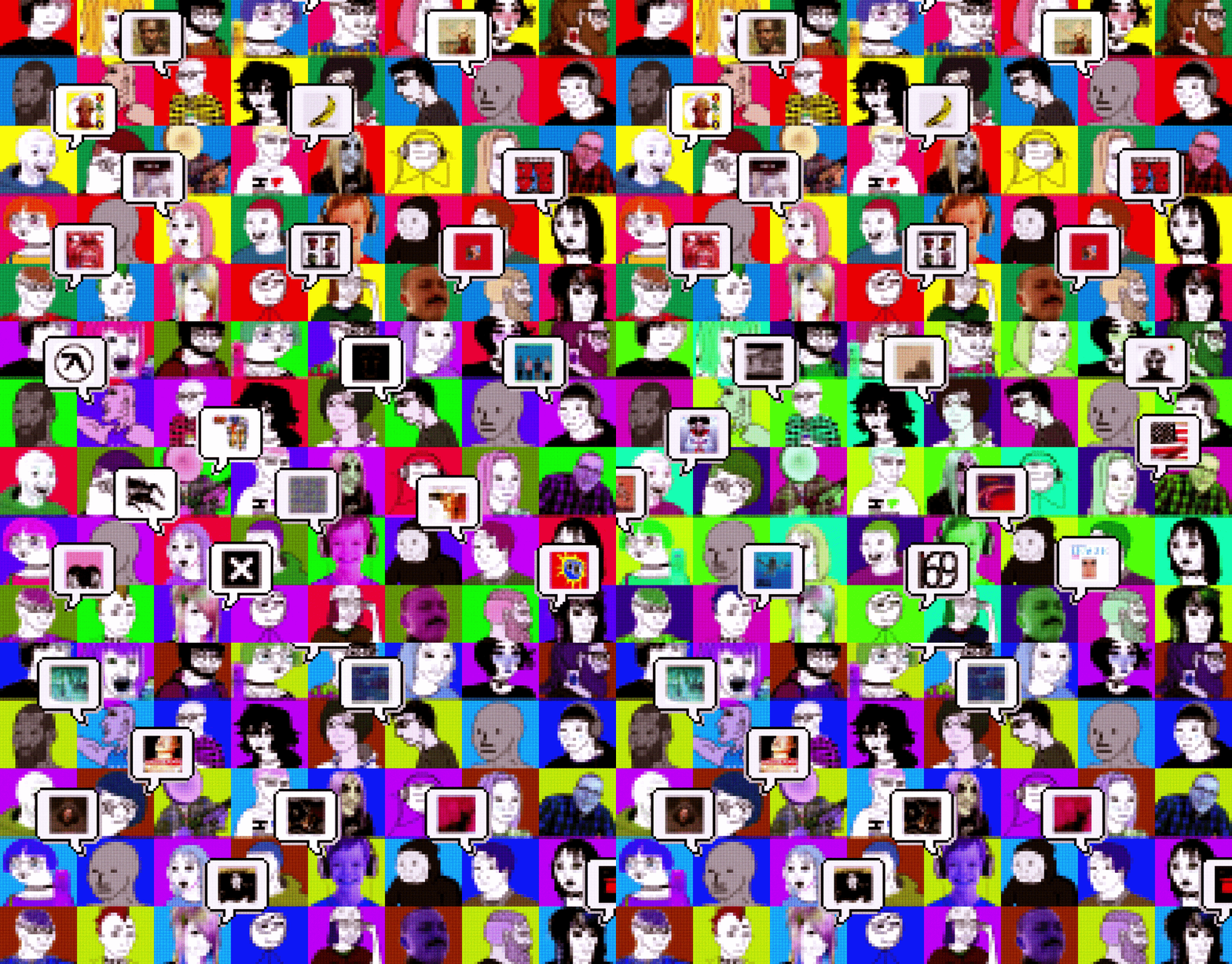
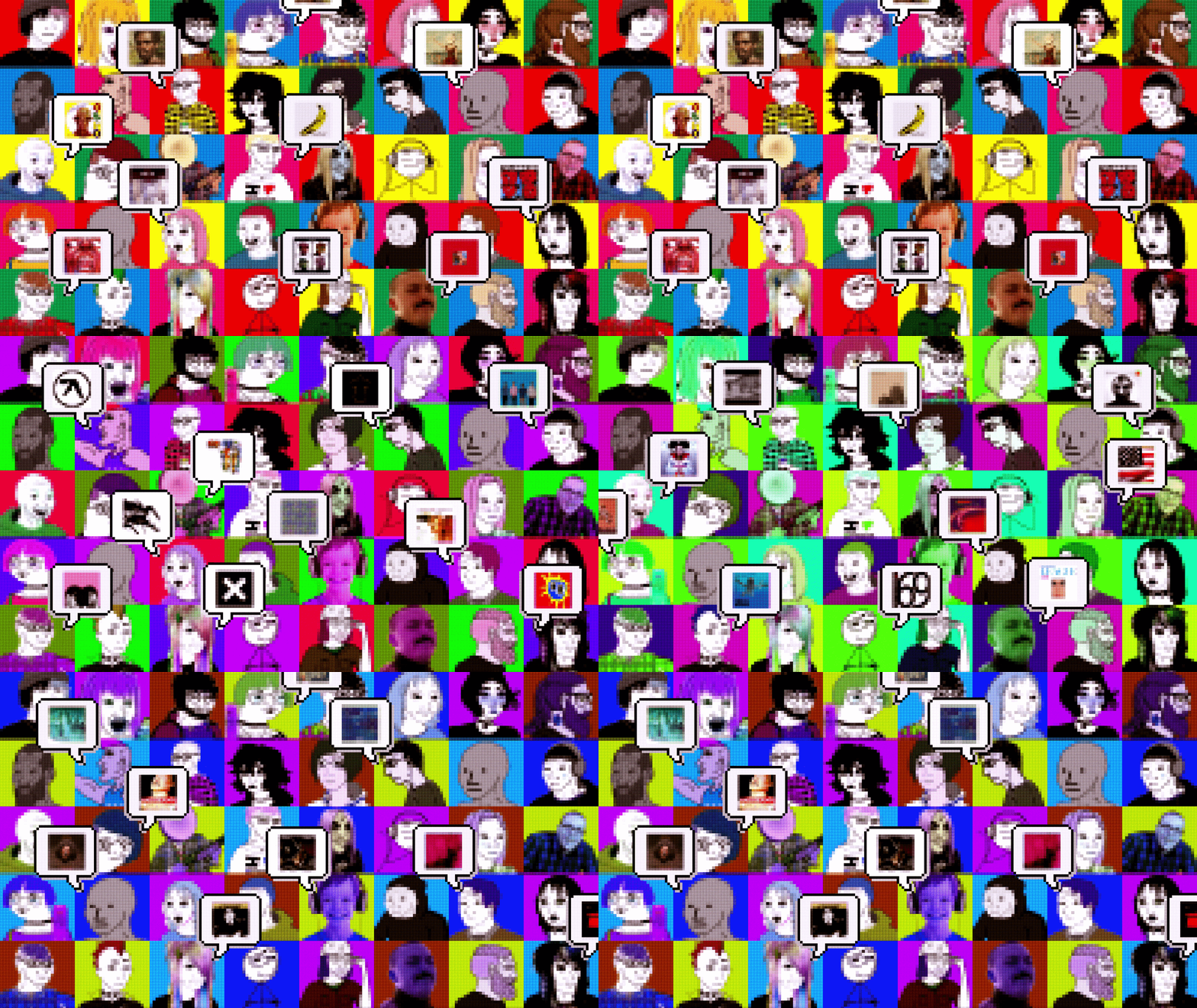
However, the project found a second life on /mu/, a subsection of 4chan dedicated to music discussion. Dan Barrett recalls posting the album there early on, facing the typical hostility of the board before it eventually transformed into an accepted favorite. By 2012, Deathconsciousness was regularly placed alongside records from My Bloody Valentine, Neutral Milk Hotel, and Swans on charts designed to introduce newcomers to ‘/mu/core’—a catchall term for the consensus favorites of the community.
The Aristocracy of the Anonymous
/mu/’s grasp of emerging meme culture felt cutting edge, even if the humor was often juvenile. An impressive depth of music literacy was required to understand niche references, such as the canonical obsession with Jeff Mangum or the ironic elevation of field recordings like Voices of North American Owls. Users were obsessed with obscure critics like Piero Scaruffi and household names from Pitchfork, often for the purpose of disparaging their opinions.

The board was also home to a thriving culture of “sharethreads,” where users curated and archived obscure releases. This culture played a significant role in the rediscovery of bands like Duster and Panchiko, which gained cult followings years after their initial activity. Despite the archetype of the 4chan poster as a basement-dwelling troll, the average /mu/ user was often a millennial hipster meticulously curating Topsters charts to showcase their taste.

Photo from @theneedledrop on X.
Anthony Fantano: The Internet’s Busiest Music Nerd
Now regarded as the most influential music critic of the internet era, Anthony Fantano launched his YouTube channel, The Needle Drop, in 2009. Fantano’s rise was inextricably linked to these online communities. While working at a pizza restaurant and writing for NPR Music, he realized there was a void in video-based music discussion. By 2012, he had quit his job to focus on the channel full-time, unaware that he was becoming a fixture of /mu/ discourse.
As an early champion of Death Grips, Fantano issued their debut album The Money Store his first-ever perfect score of 10. This endorsement, combined with the group’s meme-driven fandom, helped build a massive cult following. Fantano acknowledges his role in normalizing certain niche tastes, noting that his subversive approach felt more exciting than traditional music publications of the time.

Fantano and MC Ride.
The Great Migration and the Algorithmic Shift
The culture of 4chan eventually reached a tipping point. While /mu/ was relatively tame, the site’s engrained misogyny and the influx of far-right toxicity during the 2016 election cycle drove many users away. Communities migrated to more moderated spaces like Reddit, Twitter, and Rate Your Music. Simultaneously, the mass adoption of streaming services rendered /mu/’s culture of filesharing obsolete. Algorithms began creating perfectly curated playlists, replacing the need to comb through sharethreads for new music.

Fantano reflects on this shift, noting that as other platforms developed, people realized they could engage in music discourse without encountering the toxicity inherent to 4chan. In 2017, The Needle Drop hit 1 million subscribers, signaling that the critic’s reach had surpassed the very boards that helped launch him. The term “Fantano-core” emerged, describing a taste that blended /mu/core classics with alternative rap and poptimism.

Carly Rae Jepsen and a Swans fan.
Fantano’s influence became so pervasive that his rating system was adopted by fans on Rate Your Music and even acknowledged by major artists. In 2022, Drake famously reached out to Fantano over Instagram to rate the critic’s existence a “light to decent 1.” Fantano notes, “It’s hard not to feel like you’re making some kind of impact when the biggest rapper on the planet is angry in your DMs.”

Legacy in the Age of TikTok
Today, the music once considered niche is more popular than ever. Deathconsciousness sits high on Rate Your Music’s all-time charts, and tracks like “A Quick One Before The Eternal Worm Devours Connecticut” have gone viral on TikTok. Tim Macuga, who now works as a high school English teacher, has seen this firsthand as students discover his band through Reels and TikTok.

Have A Nice Life. Photo from band’s Facebook.
Despite this enduring legacy, Barrett and Macuga doubt that such a project could achieve the same organic success today. The discovery landscape is now heavily splintered and dictated by algorithms. Fantano observes that we are seeing the logical endpoint of internet music curation: a fragmented space where no single platform or person can dictate what the masses are listening to. While the old vestiges of the internet have faded, the torch of the internet music nerd has simply been passed to a new, algorithmically-driven generation.