

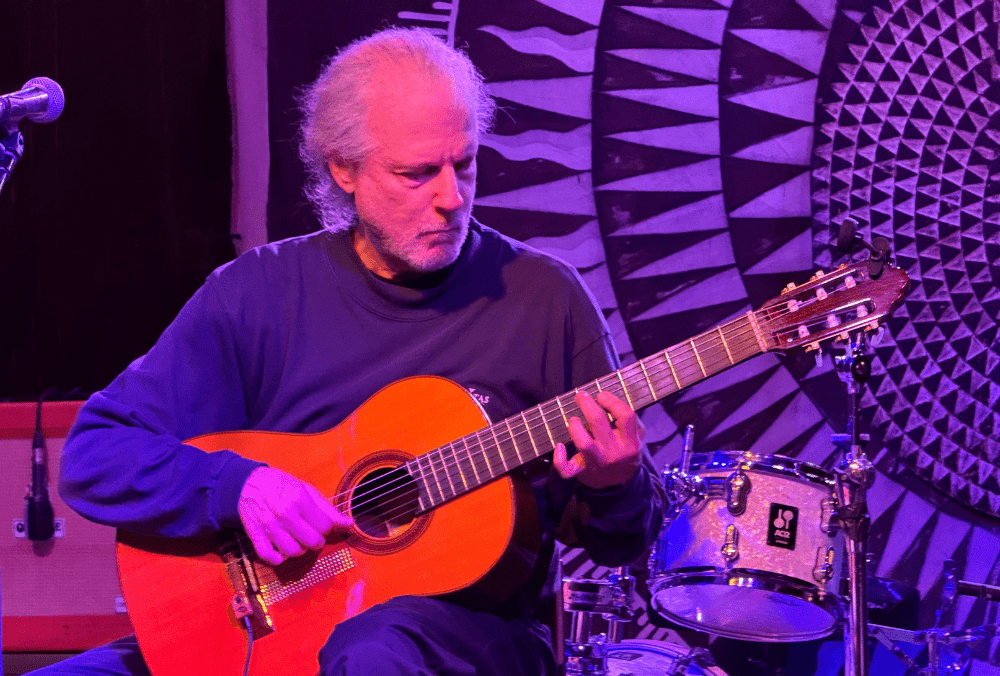
There’s a certain stillness that settles in when Sandy Ortega begins to play. Before the room reacts, before anyone reaches for meaning, there’s just sound. A guitar, a breath, and the patience to let music unfold naturally. Ortega doesn’t rush that moment. He trusts it. And that quiet trust shapes everything he does as a musician.
A New York–born guitarist with Spanish-Andalusian roots, Sandy Ortega approaches music as a lived practice rather than a pursuit. His relationship with the guitar isn’t defined by milestones or recognition. It’s defined by repetition, listening, and presence. Each performance feels less like a presentation and more like a continuation of a conversation he’s been having with the instrument for years.
Drawing from flamenco and classical guitar traditions, Ortega plays with clarity and restraint. There’s structure in his technique, but never rigidity. His performances leave space for pauses, for subtle shifts in tempo, for emotion to surface without being pushed forward. Nothing feels exaggerated. Everything feels intentional.
What stands out most is his consistency. Ortega brings the same focus and care to every performance, regardless of the setting. The size of the room doesn’t change his approach. The audience doesn’t dictate the moment. For him, the act of playing is complete in itself. The guitar isn’t a means to something else. It’s the point.
Those who experience Ortega live often describe a sense of calm settling over the space. His music invites attention rather than demanding it. You’re encouraged to listen closely, to follow the movement of the melody, to stay present. There’s no separation between the performer and the person. What you hear is genuine, unfiltered, and grounded.
In a culture that often rewards constant output and visibility, Ortega’s approach feels deeply personal. He doesn’t frame his work around exposure or outcomes. He treats music as something to be practiced with care and shared honestly. His passion isn’t loud. It’s steady and unwavering.
Sandy Ortega plays because music is where he feels most aligned. Not to be noticed, not to be measured, but to be present. And in that quiet commitment, his performances find their strength.