

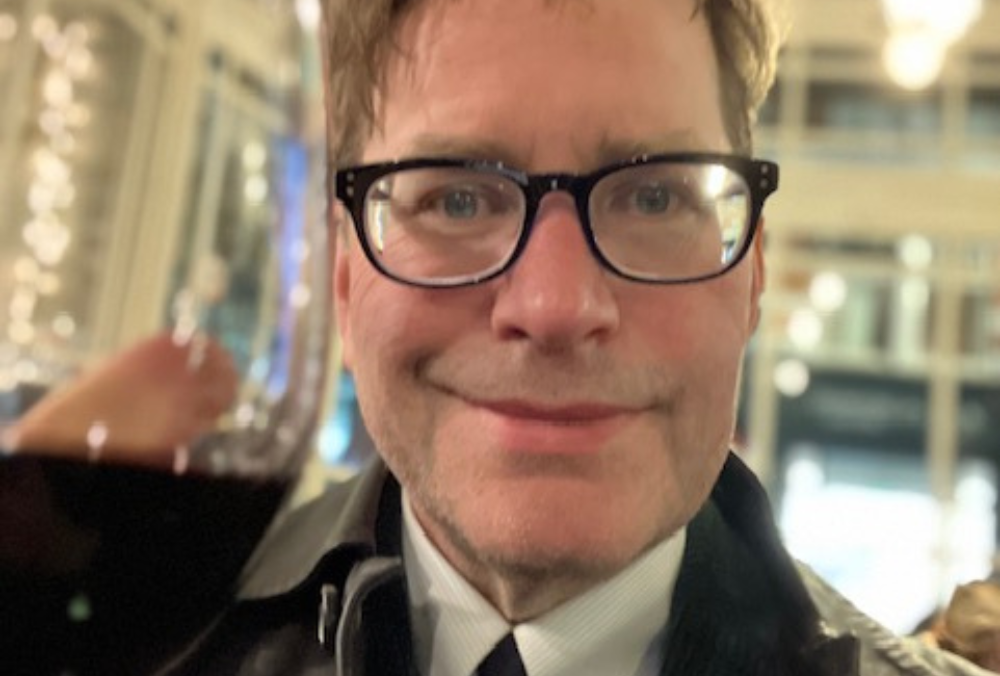
Step inside the mind of a true sonic alchemist. With more than 30 albums under his belt, Longboat bends genres, blends textures, and breaks the rules, all while keeping the human touch front and center. From jazz roots to electronic blues experiments, every track on Absentia is a journey, and today, we get the behind-the-scenes story of how it all comes to life. Get ready to see how one artist balances chaos and precision, heart and craft, in a world where music is more than sound—it’s experience.
How do you approach blending acoustic and electronic instruments to create the emotional tone of a track?
When you’re arranging any given track, and you’re dealing with both electronic and acoustic instruments, it’s all about what kind of texture you’re trying to convey. Too little textural variety is monotonous; too much is chaotic. If you’ve done it right, it won’t sound like a block of sonic glop. I never try to elicit any specific emotion from listeners. That’s up to them. All I can do is try to communicate something, and hopefully it will sound good.
Were there any specific sounds or textures you experimented with on this album that surprised you in the final mix?
The instrumentation on Absentia is very straightforward: guitars, bass, electric piano (Rhodes and Wurlitzer), drums, and voice. The textures I wanted to establish were based on the prevailing mood of each song. Ryan was great about dialing in guitar effects. Because I was working with an awesome sound engineer (Floyd Reitsma), there were very few surprises in the final mix.
Your background spans jazz, film scoring, and “electronic blues.” How do these different influences show up in your arrangements and production choices?
At heart, I’m still a jazz musician. Although I’ve been making pop albums since 2011, the saxophonist in me wants to drill down into the blues, have long solo breaks, and write extra chords where they’ll fit. Stuff like that. At the same time, I’m eager to distance myself from any compulsive way of writing music. It’s really a process of refinement at work: style and anti-style. Somehow, the two things manage to merge and don’t kill each other.
Are there particular artists, albums, or genres that informed the sonic palette of Absentia?
I just write the music in my head. I listen to very few other bands. When people speak of influences, they’re talking about the musicians they imitate. I try to write and record as myself without sounding too much like myself.
When writing, do lyrics or music come first, or do they evolve together?
Except on very rare occasions, the music always comes first. The lyrics arrive last, after the arrangement is done. They get workshopped/rewritten/hacked to pieces until the tune gains meaning and some way of justifying its existence.
Can you share the story behind one song where a specific instrumental choice or arrangement really defined the track?
Well, on the first days of band tracking for Absentia—there were two days for this album total—James kept telling me that he really wanted to play the bongos. I figured he was just joking, but he wasn’t. He was almost to the point where he was following me around with the bongos to remind me of his seriousness. The first tune where this opportunity presented itself was “Once It’s Gone,” a song about time robbing a not-very-nice woman of her once-stunning looks. It sounded fantastic. It gave the track some very unexpected dimensions. We used them the next day on “Style Grenade.” The same thing happened. Hurray for bongos! (Just don’t overuse them.)
You recorded, arranged, and produced the album yourself. How do you structure your workflow when managing all these roles?
I recorded eight albums last year. This means that you’re writing different albums all at the same time. I had already recorded two electronic albums in March. Those were written together. And Absentia was one of four, all recorded in May and early June. The last two were made in London in July and August. Every album has unifying elements, either thematic or musical (or often both), to set it apart from its companions.
Do you approach each album with a distinct “musical concept” or theme, and if so, how does that guide your process?
The most honest answer is: sometimes. Absentia was recorded along with two other themed albums that also feature a live band; one is about mortality (Prepare Yourself), and the other is about revenge (Revenge Ballads). In the past, I’ve made albums about life in music (Kill the Music!), technology (E Minus), January 6th (A Short Walk to the Capitol), how money makes people insane (Money Trouble), and two albums about the Cold War, among other efforts. With these concepts, you’re trying to approach the theme from different angles. By doing that, you can paint a more detailed and complete picture of your subject. But for sure, there is a certain amount of relief when you just get to write songs for an album that isn’t about anything in particular. Since nearly every single song I’ve written is about something, it’s a chance to tell a smaller story.
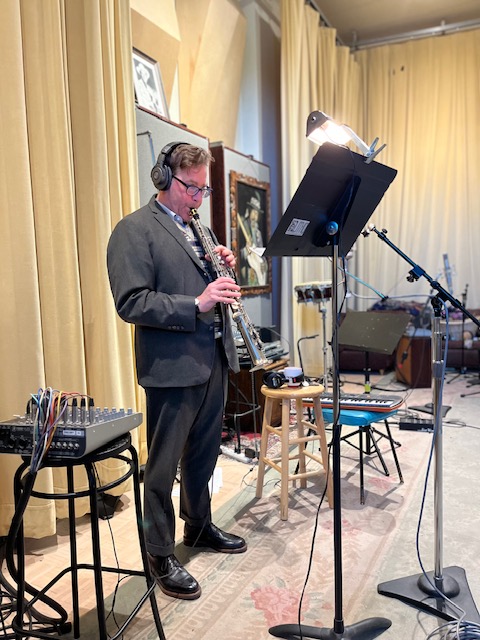
Drummer James Squires, bassist Will Moore, pianist Eric Verlinde, and guitarist Ryan Leyva all contributed to the album. How did their individual styles and energy shape the final sound?
Everyone has played on multiple Longboat albums. When he’s not being a kickass guitarist, Ryan engineers and mixes my electronic albums. Each of these fantastic musicians is well acquainted with what I want. Prior to recording, I send everybody copious notes and demos detailing what I need from them. All are encouraged to make the parts their own. And I feel that they do.
Looking at the broader arc of Longboat’s discography, how has your sound evolved, and what are you most excited to explore next musically?
I can’t tell you how I’ve evolved musically. That’s more something that you’d tell me. This is my 34th album, so have at it! But seriously, with the creep of AI into music, it’s become very important for me to present my music in the most real format possible. That means that I’m converting a whole slew of Longboat songs into piano arrangements to be played in front of small crowds in pubs here in London. The ultimate goal is to have at least 100 tunes at the ready, maybe even more. They can see my fingers hit the keys; they can hear that it’s a human being making this music (and occasionally making a mistake or two), instead of some soulless compilation of previous achievements. That’s gotta count for something in our stupid modern era.
I am planning to record quite a few albums either at the end of this year or at the beginning of next year. What they’ll be about and how they’ll sound, well, that gets determined as they come into being.
It’s always an exciting time when I’m writing music.
From bongos that steal the spotlight to piano arrangements that make you feel every keystroke, Longboat proves that true artistry isn’t about following trends; it’s about creating your own universe of sound. Absentia is just one chapter in a discography that refuses to sit still, and the next adventure is already on the horizon.